Hiển thị các bài đăng có nhãn Ford. Hiển thị tất cả bài đăng

Thứ Ba, 22 tháng 12, 2009

1965 Ford Mustang replica pool table


Men love cars. Men like playing pool. It's easy to draw a simple conclusion: men would most likely love playing pool on a car. And that's how we imagine that the idea of creating a Mustang pool table was born. Made with a solid fiberglass body molded from a 1965 Mustang that can be ordered in various colors, the pool table comes complete with alloy rims and wheels.


more detail. ...

Muschallaro: Camaro , Challenger and Mustang

Three Pony Cars in One

A talented modeler named Robert D. came up with the wacky idea of creating a scale-model that combines elements from the latest editions of Detroit's pony cars: the body of a Chevy Camaro, the front end of a Dodge Challenger and the rear-end of the Ford Mustang. And this here is the result.

Three Pony Cars in One

We have a "Retro in the Metro" theme for our NNL in 2 weeks. We have a Challenger, Camaro, and Mustang illustrated on our flyer. One of my cohorts was planning to build one of each for the show. I realized I might be able to do all three in one model.

Three Pony Cars in One

"I like the main body of the Camaro better than the Challenger. I like the Challenger front end better than the Camaro. Once the idea was in my head to add Mustang to the equation, it all came together, because I found out pretty quickly that the three could combine into one," Robert stated in a forum for model cars.

Three Pony Cars in One

The Camaro front end is longer than the Challenger, I cast the stock hood and lengthened it using two resin hoods grafted together. The front is longer, but the model will use Camaro chassis/interior, wheelbase is shorter than Challenger.


More Photos

2010 Ford Fusion Sport

2010 Ford Fusion Sport
2010 Ford Fusion Sport Wallpaper

2010 Ford Fusion Sport
2010 Ford Fusion Sport Picture

2010 Ford Fusion Sport Interior

Thứ Hai, 21 tháng 12, 2009

Focus RS with 401 HP - by Mcchip-dkr GmbH

Ford Focus RS with 401hp by Mcchip

Quick as a bird and dressed with sportive elegance - these are the strengths of new Ford Focus RS. But in case of Mcchip-dkr still there is another characteristic to add: it is vigorous like a purebred sports car!

Ford Focus RS with 401hp by Mcchip

The well-known software tuner from Salzgitter/Germany has perfectly attuned the performance to the vehicle. The result is only uncompromising fun from driving but also full suitability for daily use. The engine, completely overhauled by Mcchip-dkr, reaches enormous 401 hp.

Ford Focus RS with 401hp by Mcchip

Certainly tuned by Mcchip-dkr Focus RS is an outstanding vehicle in any situation. Mcchip offers two power upratings at once. Power stage 1 transforms serial 305 hp (440 Nm) into comfortable 345 hp with no less than 520 Nm. Power stage 1 consists „only" in software optimization made by Mcchip-dkr, available for 799 Euro, and your car will easily reach the speed of 271 km/h.

Ford Focus RS with 401hp by Mcchip

However it is power stage 2 for 4,499 Euro that transforms Focus RS into a whole-blood athlete. Power stage 2 gives the car even 401 hp. That is enough to accelerate RS up to 278 km/h without any problems. In addition to that the torque equals to 612 Nm. That means powerful pulling and dynamic drive. The „big" power stage consists in the enhanced intercooler and sports exhaust system, modified inlet manifold incl. tubes, special sparking plugs as well as world famous and in-house engine electronics.
More Photos

2010 Ford Mustang Shelby GT500 Supersnake


Dry runs of the Super Snake appear it had 635 application extensive the wheels. Alike admitting the official ability achievement abstracts are not yet out, it would be safe to accept the ability at the crankshaft to be abreast 760 horsepower. The massive ability can calmly over appear the anchor provided by the ultra adhesive PZeros tires alike in the third gear. It is acutely adamantine to awning all the ponies to a amazing dispatch time after baking the tires. The car struggles to administer the added ponies that the Super Snake comes with, consistent in a slower 0 to 60 mph time than the abject GT500.

Thứ Bảy, 19 tháng 12, 2009

Fancy a camouflage F-150? Graphics for entire Ford lineup coming soon


At the LA Auto Show this year, Ford showed off several North American-market Ford Fiestas. The cars themselves received a warm reception, as did the customized versions on hand to show off the possibilities. One Fiesta in particular caught our eye: It was a fairly stock-looking white car with some outrageous black graphics on its flanks. We came to learn that this wasn't just a one-off. It was, in fact, part of a new Ford program to allow buyers to similarly customize any Ford in the vehicle lineup.


The generically-named Ford Custom Graphics are a series of vinyls that can be used to add a little extra something to your blue oval beauty. Ford says the graphics are scratch-resistant and weatherproof, and retain the car's 3 year, 36,000 mile warranty. They will be sold exclusively through Ford dealers.


Although the Fiesta designs are the only pages open right now, there are previews of other planned graphics on the FordCustomGraphics.com website. We've assembled some of them here for you in the gallery below. The lower camo on the F-150 is particularly eye-catching, but there are similar treatments for every single vehicle in the Ford family brochure. Check 'em out.


More Photos

Thứ Sáu, 18 tháng 12, 2009

1995 Ford GT90 concept going up for auction


Est. 720 bhp, 6.0 liter quad-turbocharged mid-engine V12, five-speed manual gearbox, four-wheel independent suspension, and four wheel ventilated disc brakes. Wheelbase: 116"

The one-off GT90 Concept Car, labeled immediately as "the world's mightiest supercar" by Ford Motor Company on December 6, 1994, was the spiritual successor to the Ford GT40, the product of a colossal feud in the early 1960s between the Blue Oval from Dearborn and the Prancing Horse of Northern Italy. The GT90 draws from the design cues of its heritage and pays homage to the famed Le Mans-winning Ford GT40s of the 1960s, which were created after the failed attempt by Ford to buy out Ferrari.

GT40 Heritage

The failed acquisition of Ferrari only strengthened Henry Ford II's resolve to beat Ferrari, and he therefore decided to take on the Commendatore head-on in international sports car racing. There was very little interest in this form of racing in America at the time, but Ford was prepared to gamble that European wins, Le Mans in particular, would capture the country's imagination. He was right.

After the Ferrari debacle, Henry Ford II declared that he wanted to win Le Mans in 1966, and Ford's Lee Iacocca and Leo Beebe were given the job of forming Ford Advanced Vehicles. Instructed by Henry Ford II to spend whatever money necessary to develop a racing program that would beat Ferrari in the most public of ways, the team went to work.


Ford's idea was to develop a car that could be built around the 1963 Indianapolis 4.2-liter pushrod engine. The mid-engined coupe that the company had in mind was to be the very cutting edge of modern GT car design with careful attention paid to aerodynamics. Ford realized that many of their plans were echoed in the Lola GT, designed and built by Eric Broadly at his workshop at Bromley in England. Broadly, too, had seen the potential of the Ford V8 as a GT racing engine and incorporated a stock 260 cubic inch version in his car, first exhibited at the London Racing Car Show in January 1963. As it happened, the Lola GT was 40 inches high. The Ford GT would also be this height, and it is for this reason that the car was christened the GT40.

The first two prototype Ford GT40s were launched in April 1964, and the GT40's first race was the 1,000 kilometer at the Nürburgring on May 31. Phil Hill qualified the blue and white coupe second to John Surtees's Ferrari 275P, and although the car retired with a broken suspension bracket, the GT40 had shown its potential.

In 1965, when the project was handed over to the Shelby-American team of Cobra fame, a total of ten cars had been built. By the end of February 1965, a number of significant changes had been made to the car under the direction of Carroll Shelby, his chief engineer Phil Remington, and Ken Miles, Shelby's test driver. The 4.2-liter dry sump Indianapolis engine was replaced with the famous wet sump 4.7-liter, 289 cubic inch V8 that powered Shelby's Cobras and developed 385 brake horsepower.

The first race the re-worked car was entered in was the 2,000 kilometer Daytona Continental Race on February 28, 1965. The car, driven by Lloyd Ruby and Ken Miles, won the race with Bob Bondurant and Richie Ginther in a second car finishing third. Suddenly, the GT40 was on the map and a force to be reckoned with.

With the GT40 now fully developed, Roy Lunn was given the job of overseeing production of a Mark II version of the car. Work on two new cars began in the spring of 1965 at a new Ford racing subsidiary, Kar Kraft, in Detroit. The GT40 Mark II was fitted with Ford's mighty 7.0-liter V8. The engine had tremendous torque and a wide power band and had been very successful racing in other formats. The Mark IIs were immediately quick, finishing first, second and third in the 1966 Daytona 24 Hour race; this was followed by victory at the 12 Hours of Sebring and the famous clean sweep at Le Mans, where Ford GT40s once again crossed the line first, second, and third. Ford's gamble had paid off, and the GT40 dominated sports car racing, as intended, making it one of the most successful road/competition cars ever built.


Development of the GT90

At a development cost in the neighborhood of $3 million, the GT90 was certainly worthy of pulling styling cues from the original Ford GTs, and although it was never meant for production, it was built according to a Ford press release as a "test bed for technology, engineering and design concepts, and driver-oriented features that eventually may be used in Ford production vehicles."

Officially unveiled to the public in January 1995 at the Detroit Auto Show, the GT90 is finished in bright white with a bright blue and carbon fiber interior. It features a mid engine quad-turbocharged V12 that produces an estimated 720 horsepower and 660 pound-feet of torque. As a result, it had a claimed top speed of 253 mph, which even by today's standards would make it one of the fastest production cars in the world – faster even than a McLaren F1, which was widely considered the world's preeminent supercar at the time.

Built by a small specialized group over at Ford SVT in just over six months time, the concept's development timeline was very tight and therefore borrowed components from other vehicles. The team mainly borrowed parts from another supercar that was also way ahead of its time, the Jaguar XJ220.

The engine, which was a 48-valve six-liter V12, had to be combined together with four Garrett Systems T2 turbochargers in order to reach its estimated 720 horsepower and was based on the Ford Modular engine. Created by using parts of two Lincoln V8 engines, engineers removed the last pair of cylinders from the rear of one engine and the first pair of cylinders from the front of the other engine. The cut-down engines were then welded together with the final result being a 90-degree V12, which utilized a 90.2 mm bore and a 77.3 mm stroke to achieve maximum power.


The GT90 features the FFD-Ricardo five-speed manual gearbox found on the XJ220 and, considering the torque load that it is designed to handle, is noted as having a relatively light shift quality. Also borrowed from the XJ220 comes the all around double wishbone suspension that was designed to enable the car to handle well at top speeds.

Using Ford's new "Edge" design philosophy, the car incorporated advanced technology with a mixture of flat planes, angles, glass and triangular shapes that seemingly all collided together. The GT90 was the first car created using this new styling directive from Ford, which went on to be responsible for the creation of other Ford products like the Ka and Cougar. The effect is most impressive and a wonderfully executed stylistic throwback to its GT40 predecessor, which at once stays true to its heritage but acknowledges the advances in modern design. Taken directly from race car technology, the GT90 body panels are molded out of carbon fiber while the chassis is formed out of a honey-comb sectioned aluminum monocoque.

The GT90 is a test bed of advanced technology and design. It sports a tinted, laminated glass bubble over the cockpit and a spoiler that rises off the rear deck at high speeds. According to Ford, it has a "design that tightly enclosed its mechanicals with no wasted space; high tech lighting and blind-spot detection systems; and tiles like those on the space shuttle to shield the V12's exhaust outlets."


The interior of the car is easily accessed by pushing on a small yellow panel located on the B-pillar that allows the door to swing open. Amazingly for a supercar, it is relatively easy to climb into the cockpit, as the door sill is low and narrow, and the glass which arcs well into the roof is fixed to the door. Reminiscent of an airplane cockpit, the interior is finished in bright blue suede and leather, a carbon fiber center console and custom blue lit gauges. An abundance of brushed and polished aluminum adorns the interior, from the open shift gate and linkage to the controls on the center console, right down to the key for the car.

Ford's engineers included a few other options that were designed for use on the show circuit; the tires were specially made with "GT90" carved directly into the tread, and the doors, as well as all of the lights both inside and out, could easily be opened or turned on via a remote control.

After its unveiling in Detroit, the GT90 made its rounds on the Auto Show Circuit in 1995, traveling around the world to Frankfurt and as far away as Tokyo. With few other showings in between, the car recently was shipped over to Europe to be on display in the Ford of Europe 2008 exhibit at the Goodwood Festival of Speed. After returning home, the car was shipped to Alabama where it was on display as part of the Mustang 45th Anniversary Celebration.

This superb concept car remains in excellent running condition, having been properly stored and maintained over the years in between its show appearances. RM Auctions is proud to publicly offer the GT90 for the first time ever at auction. A remarkable one-off piece of automotive history and cutting-edge design, its offering may very well be a once in a lifetime opportunity for Ford devotees and concept car enthusiasts.

More Photos

Thứ Tư, 16 tháng 12, 2009

2010 Ford S-MAX with all-new 2.0-litre Ford EcoBoost SCTi engine


2010 Ford S-MAX with all-new 2.0-litre Ford EcoBoost SCTi engine
When the S-Max was launched back in 2006, the model was a winner for Ford of Europe from the start. It promptly took the European Car of Year Award prize and went on to be a sales success and a favorite of consumers and auto journalists alike. Now the S-Max is due for a mid-generation facelift and Ford needs to keep the model fresh without compromising its hard-won credentials with the public.
The 2010 Ford S-MAX will be available with significant detail changes to the exterior including a strongly sculptured bonnet and all-new front fascia, emphasised by the bolder graphic of the gloss black lower front trapezoidal grille. This gives Ford S-MAX a distinctive new presence on the road and a new lower front bumper which, on high series models comes with distinctive LED daytime running lights (optional for Trend series), further strengthens the car’s purposeful stance. From the side, Ford S-MAX is instantly recognisable and now stands out even more with its window profile enhanced by a chrome strip, which surrounds the whole glass area to enhance the car’s sleek and sporty lines.

2010 Ford S-MAX with all-new 2.0-litre Ford EcoBoost SCTi engine
The rear of new Ford S-MAX has also been re-designed with a more dynamically profiled tailgate, a lower fascia, and new LED tail lights that extend deep into the rear side flanks, creating an even stronger athletic appearance. Peer at the nose and slightly repositioned air intakes with adjacent foglights coming into view. Above them, a shapelier hood with twin design lines adds a sporty flavor to the otherwise bland van. Boosting its premium appeal while further distinguishing the new car is a horizontal satin chrome bar, which runs between the LED tail lights and is embossed with the distinctive S-MAX logo.

2010 Ford S-MAX with all-new 2.0-litre Ford EcoBoost SCTi engine
The Ford S-MAX offer an all-new 2.0-litre Ford EcoBoost SCTi engine. Featuring lightweight all-aluminium construction, the latest-generation high-pressure direct injection system, low-inertia turbocharging and twin independent variable cam timing. The 2.0-litre EcoBoost SCTi engine has a maximum output of 203 PS (149kW) at 5,500 rpm, combined with maximum torque of 300 Nm, which is delivered across a broad 1,750-4,500 rpm range. With this new powertrain, the Ford S-MAX achieves 0-100km/h (0-62 mph) acceleration in 8.5 seconds and a top speed of 221 km/h (137 mph).

2010 Ford S-MAX

2010 Ford S-MAX
2010 Ford S-MAX Photo
2010 Ford S-MAX Wallpaper
2010 Ford S-MAX Interior

2010 Ford S-MAX Image2010 Ford S-MAX Wallpaper Image

The 2010 ford s-max makeover is a little more noticeable that that of the 2010 Galaxy. At the front, the new S-MAX gains a redesigned bonnet, bumper and upper and lower grilles, with the high series models now featuring distinctive LED daytime running lights.

2010 Ford F-150 Harley Davidson Edition


The exoteric of the 2010 Ford Harley-Davidson F-150 offers a adventurous advanced fascia and six-bar shaped batten actualization grille and boasts specialized artificial aluminum and Harley-Davidson® chrome badging. The barter will accept a bargain actualization because of a absolutely chip adaptable active board.

Thứ Hai, 14 tháng 12, 2009

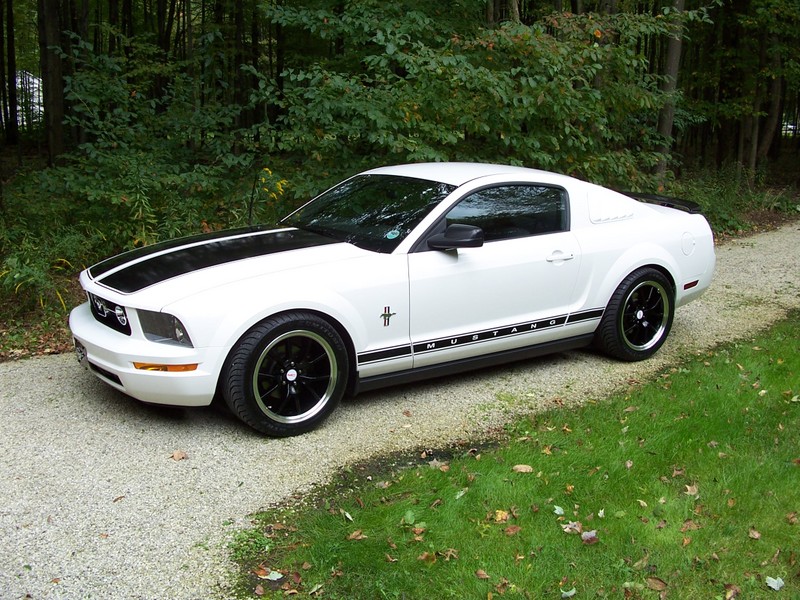
2006 ford mustang


2006 ford mustang
2006 ford mustang

2006 ford mustang
2006 ford mustang

2006 ford mustang wallpapers

2006 ford mustang wallpapers

2006 ford mustang
2006 ford mustang

Bài đăng phổ biến